Valve Casting Guide: How to Choose the Right Material

Valve material selection for cast bodies and trim — from CF8 and WCB through 17-4PH and Inconel, aligned with ASTM and ASME B16.34.

Direct answer: Cast valve-body material selection spans three families — austenitic stainless (CF8/CF8M, ASTM A351), carbon and low-temperature carbon steel (WCB/LCB, A216/A352), and specialty alloys (17-4PH, duplex, Inconel) for severe service — matched to temperature, pressure, and fluid chemistry.

What Is a Valve Material?

Selecting a valve body material is one of the most consequential decisions in valve engineering and procurement. This valve casting guide consolidates valve material selection practice for cast bodies and trim — use it with our stainless steel casting grades reference and casting design guide when qualifying new valve programs.

A valve material is the cast or wrought alloy specified for the pressure boundary and internal trim of a valve assembly. Material choice governs how long a valve performs safely under a given combination of temperature, pressure, and fluid chemistry — it is not a cosmetic specification. For investment-cast valve programs, engineers typically work within three families: austenitic stainless castings (CF8, CF8M per CF8/CF8M), carbon and low-temperature carbon steels (WCB, LCB per carbon steel grades), and specialty alloys such as 17-4PH, Monel, Inconel, and duplex grades for severe service. Core ASTM material standards for cast valve bodies include A351 (stainless), A216 (carbon steel), and A352 (low-temperature carbon steel). Pairing the correct valve body material with trim hardness and sealing strategy is the foundation of any sound valve casting guide.

Cast grades differ from wrought equivalents in melt practice, heat treatment, and NDT requirements. Foundry minimums from ASTM define tensile, yield, and elongation; finished valves are validated by machining, assembly, and hydrostatic test per API 598 or MSS SP-61. Document NACE MR0175 / ISO 15156 limits, impact-test temperature, and weld-hardness caps whenever H2S, LNG, or high-cycle actuation applies.

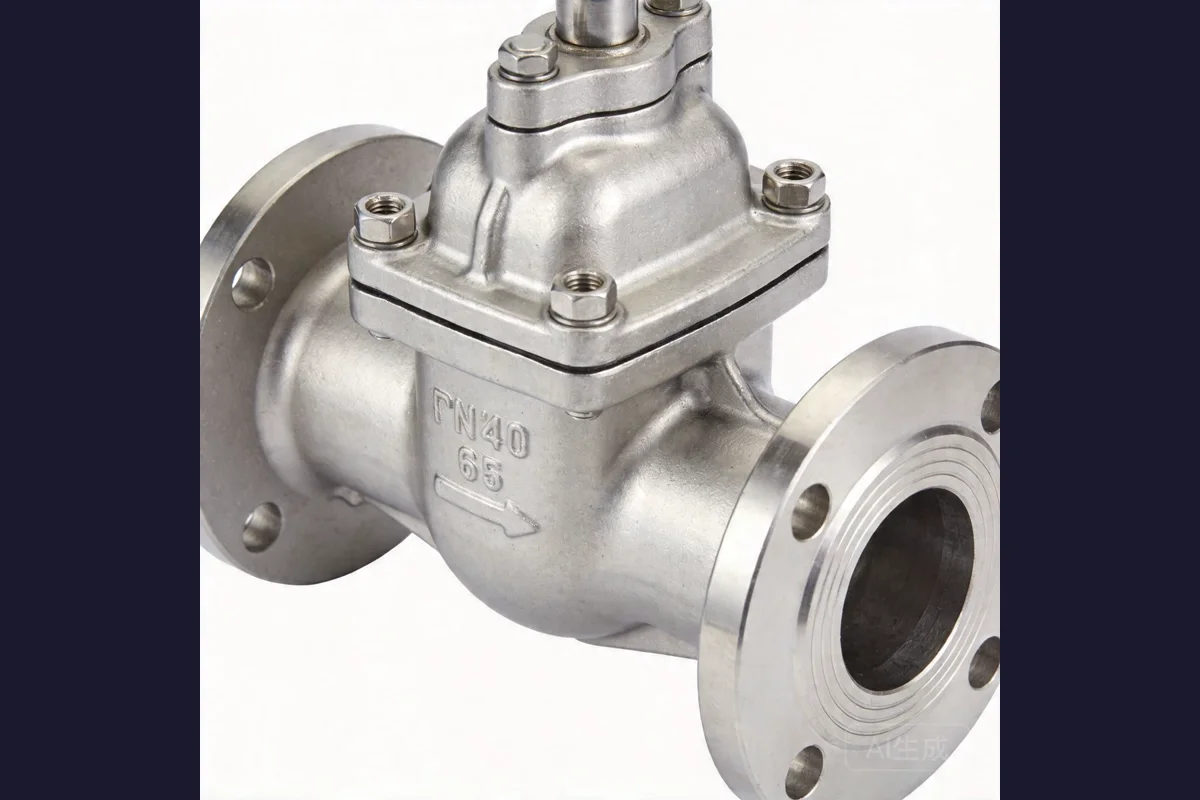
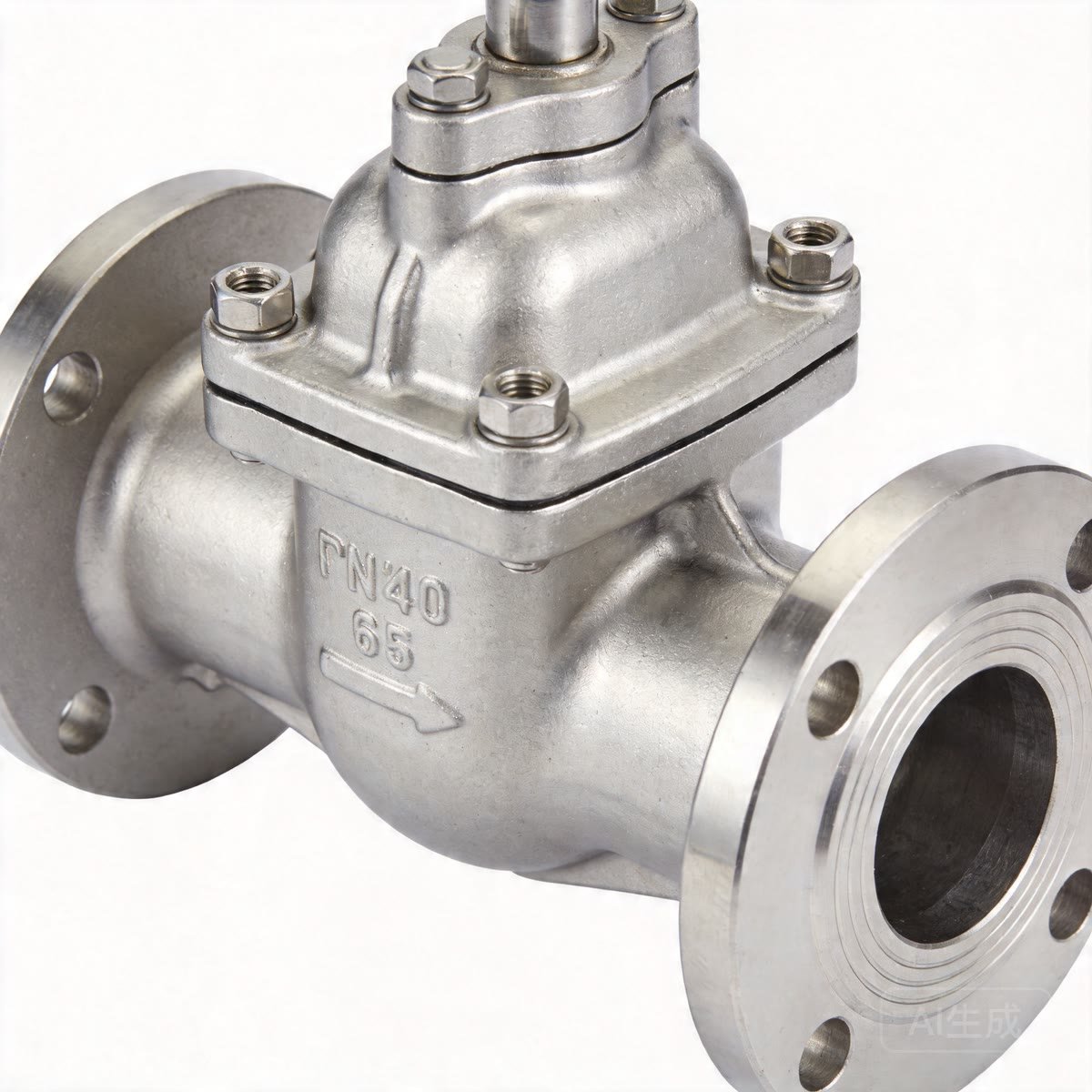
Valve body investment casting CF8 CF8M stainless steel precision cast valve components

Temperature and Pressure Considerations

Valve material selection starts with the operating envelope. Carbon steel WCB covers most utility and steam duties up to 425°C, while chrome-moly grades (WC6, WC9, C5) extend high-temperature capability. For cryogenic LNG and liquefied hydrocarbon service, LCB under ASTM A352 provides Charpy impact verification at −46°C. Final pressure integrity must always be checked against ASME B16.34 ratings for the chosen material group and pressure class. After casting, critical sealing surfaces and flange faces typically require CNC machining to meet shut-off tolerances — see our casting design guide for wall-thickness and datum planning on near-net valve geometries.

Pressure class (Class 150 through 2500) defines flange dimensions and bolt loading; it does not, by itself, define the alloy. A Class 600 WCB gate valve and a Class 600 CF8M ball valve share the same flange rating but different temperature derating curves. For oil and gas isolation and control service, Class 600–2500 carbon and low-alloy bodies remain common; moving to CF8M or duplex at the same class often extends the allowable temperature without changing the flange pattern. Investment-cast bodies in CF8M and 17-4PH trim are typical on valve casting programs where near-net shape reduces machining on complex internal passages.

  • WCB: −29°C to 425°C — most common valve body grade
  • WC6: up to 540°C, 1.25Cr-0.5Mo low-alloy casting
  • WC9: up to 580°C, 2.25Cr-1Mo for higher temperature
  • C5: up to 600°C, 5Cr-0.5Mo severe high-temperature
  • LCB: down to −46°C, low-temperature carbon steel
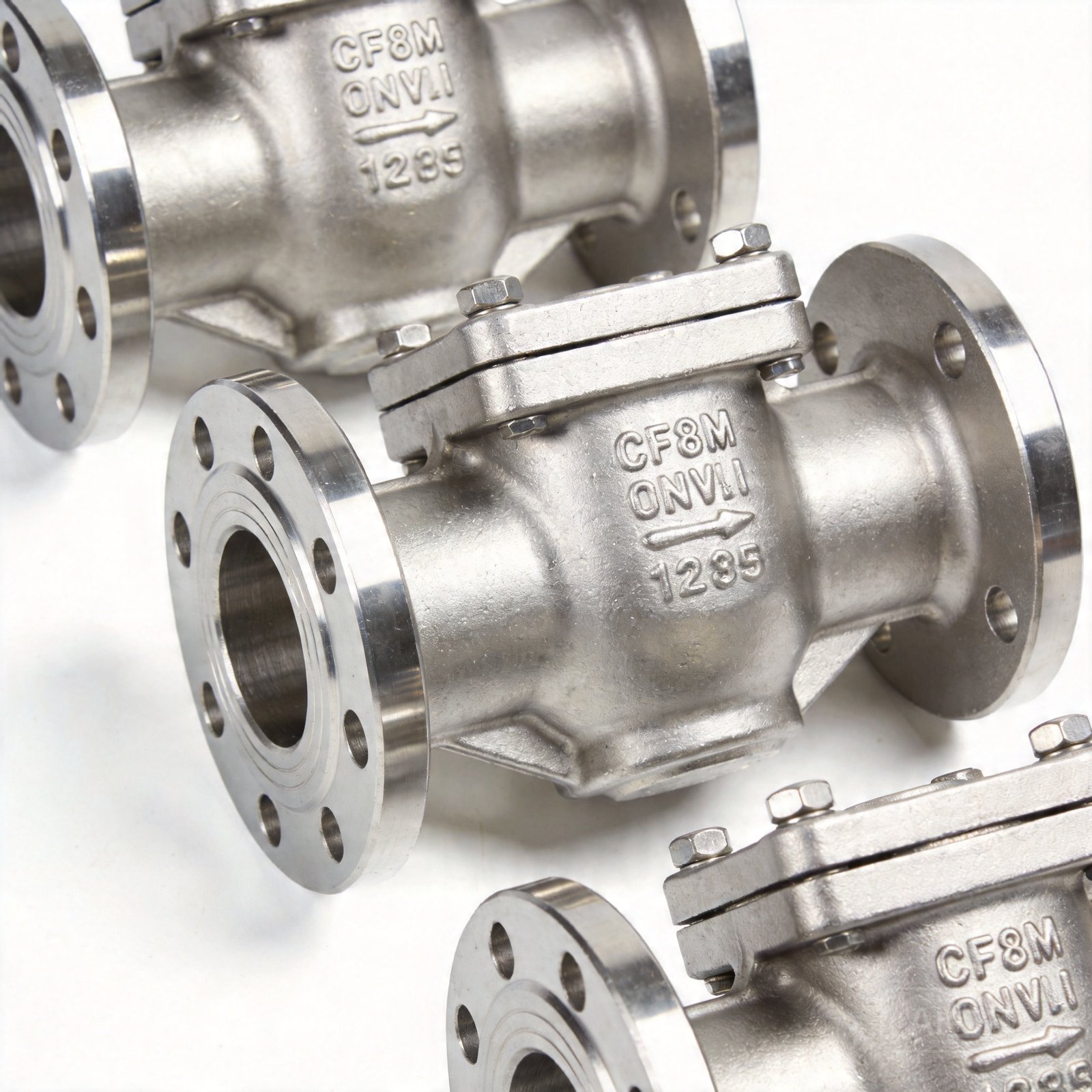
Stainless steel valve casting material — CF8M and duplex grades

Corrosion Resistance Guide

Corrosive media push selection from general-purpose austenitic grades toward molybdenum-bearing and duplex alloys. CF8M (316 equivalent) handles many chemical and moderate chloride duties; super duplex CE3MN (2507) and Monel K500 address seawater and sour-gas environments where pitting and sulfide stress cracking are concerns. Always cross-check NACE MR0175 / ISO 15156 when H2S is present. For grade-by-grade chemistry, PREN, and cost comparison, see our stainless steel casting grades guide and the broader stainless steel materials hub; for program context across end markets, see valve casting applications by industry.

  • CF8M (316 SS): general corrosion, chlorides up to moderate temperature
  • CD3MN (Duplex 2205): higher chloride resistance plus strength
  • CE3MN (Super Duplex 2507): seawater, high-chloride, high-pressure
  • CN7M (Alloy 20): sulfuric acid and mixed acids
  • CW-12MW (Hastelloy C): extreme reducing and oxidizing media
  • Selection tip: always check NACE MR0175 for H2S service
Valve material mechanical properties comparison table — CF8, CF8M, WCB, 17-4PH, Inconel, Duplex

Valve Material Properties Comparison

Mechanical properties from ASTM minimum requirements define what each grade can carry before you apply ASME B16.34 allowable stress reductions. Key indicators for cast valve bodies include tensile strength (Rm), yield strength (Rp0.2), elongation, Brinell hardness, and certified temperature range. Trim alloys such as 17-4PH casting in H900 condition are evaluated separately because they govern wear resistance and stem integrity rather than flange pressure rating — body alloys set the pressure boundary, while precipitation-hardening stainless supports discs, stems, and seat rings under erosive flow. Use the table below as a screening tool; confirm final design with ASME BPVC Section II-D allowable stress at the maximum metal temperature. For chemistry limits and heat-treatment notes on austenitic pours, cross-reference the CF8 and CF8M data sheet.

Material Standard Tensile (MPa) Yield (MPa) Elongation % Hardness HBW Temperature range
CF8ASTM A351≥485≥205≥30150–190−196~425°C
CF8MASTM A351≥485≥205≥30150–190−196~425°C
WCBASTM A216≥485≥250≥22≤197−29~425°C
LCBASTM A352≥485≥250≥22≤197−46~345°C
17-4PH H900ASTM A747≥1170≥1035≥10330–380−29~315°C
Monel K500ASTM A494~790~550~20200–260−100~480°C
Inconel 625ASTM A494≥690≥275≥30~200−196~600°C
Duplex 2507ASTM A890≥800≥550≥25~270−46~315°C

Matson Foundry supplies investment cast valve bodies and trim in these grades with melt certification, heat-treatment records, and NDT per project specification.

Valve material selection matrix by application, temperature and pressure class

Valve Material Selection by Application

Application context narrows hundreds of possible alloys to a short list. The matrix below maps common process environments to proven cast grades. It assumes pressure class and wall thickness have been sized per ASME B16.34; always validate upset temperatures, cleaning chemistry, and cyclic loading that steady-state calculations omit.

Application Recommended materials Rationale
Steam systemsWCB (≤425°C), CF8/CF8M (>425°C)Temperature range aligned with ASME B16.34 groups
Corrosive mediaCF8M, Duplex 2205/2507Mo improves pitting resistance in chlorides
Low temperature (−46°C)LCB, CF8Impact toughness and cryogenic ductility
High pressure >600#WCB, Duplex 2507, 17-4PH (trim)Strength for body and erosive trim
High temperature >425°CInconel 625/718Creep and oxidation resistance
Food / pharmaceuticalCF8 (304), 316LCleanability and corrosion resistance
SeawaterCF8M, Duplex 2507, Monel K500Pitting and crevice corrosion resistance
H2S sour serviceMonel K500, Duplex, InconelSSC / HIC resistance per NACE
Valve seat and trim material pairing chart — Stellite, PTFE, 13Cr vs application

Seat and Trim Material Selection

Body alloy selection is only half of shut-off performance. Seat and trim materials must survive sliding wear, corrosion, and thermal cycling at the sealing interface. Hard-facing alloys such as Stellite provide metal-to-metal sealing for steam and erosive duties; elastomeric and PTFE-based soft seats achieve bubble-tight closure in chemical service but have narrower temperature and abrasion limits. Trim hardness should exceed body hardness at the contact patch to minimize galling. Pairing recommendations below reflect common API and manufacturer practice.

Seat / trim pairing Hardness Typical service
Stellite 6 + 13Cr38–44 HRC / 200–250 HBSteam, high temperature, particulates
Stellite 21 + Stellite 6300–350 HB / 38–44 HRCSevere corrosion plus abrasion
PTFE + 304/316Soft sealChemical media, low-leakage duty
13Cr + 13Cr200–250 HBOil and gas, moderate temperature and pressure
Hard seal (Stellite overlay)≥38 HRCHigh temperature and pressure, particulates
Soft seal (PTFE / PPL)Shore D 60–70Chemical and high-purity fluids

17-4PH precipitation-hardening stainless is widely used for stems, discs, and seat rings where high strength and machinability after heat treatment are required. For body-and-trim packages cast and finished in one supply chain, review our valve casting capability and machining scope.

Pressure Class and Temperature Range (ASME B16.34)

ASME B16.34 defines pressure-temperature ratings for flanged and butt-weld valves. Each material is assigned to a material group (for example Group 1.1 for WCB, Group 2.1 for CF8, Group 2.2 for CF8M). At a fixed pressure class — Class 150, 300, 600, 900, 1500, or 2500 — the maximum allowable working pressure decreases as fluid temperature rises. This is why a WCB Class 600 valve rated at ambient temperature cannot hold the same pressure at 400°C without derating, and why stainless groups often retain higher allowable pressure at elevated temperature than carbon steel. Class 150 is the baseline for comparison tables; Class 300 and 600 multiply allowable stress by factors defined in the standard, but the shape of the temperature derating curve still follows the material group.

When specifying cast valve bodies, state both the pressure class and the maximum design temperature so procurement can verify the correct material group on the rating table. High-temperature services above 425°C typically require Group 2+ stainless or nickel alloys; cryogenic services below −29°C on carbon steel require LCB (Group 1.5) or austenitic grades such as CF8 (Group 2.1) with proven impact properties.

Material Group 38°C 93°C 200°C 300°C 400°C
WCB1.119.6 bar17.113.710.57.6
CF8M2.219.6 bar19.116.513.79.9
CF82.119.6 bar17.715.312.69.5
17-4PH H9002.519.6 bar18.816.313.4

Values shown are Class 150 allowable gauge pressures in bar; higher classes scale proportionally but retain the same temperature-derating shape. Always use the official ASME B16.34 tables for final design sign-off.

For procurement teams sourcing cast bodies, include the required pressure class, design temperature, and NACE or API supplement on the RFQ so the foundry can quote the correct material group, heat treatment, and hydrostatic test margin. Class 600 and above on WCB are common in oil and gas isolation service; moving to CF8M or duplex at the same class often extends the temperature ceiling without changing flange dimensions. Trim in 17-4PH H900 remains rated under Group 2.5 but is not a substitute for upgrading the body when the flange rating is the limiting factor.

Frequently Asked Questions

What are the most common stainless steel materials for valve castings?

CF8 (304 equivalent) and CF8M (316 equivalent) per ASTM A351 are the most widely specified cast stainless grades. CF8 suits water, steam, and mild corrosion; CF8M adds 2–3% molybdenum for stronger resistance in chemical and marine environments. See our CF8 and CF8M data sheet for chemistry and mechanical limits.

What is the difference between WCB and LCB?

WCB (ASTM A216) is standard carbon steel for valve bodies from −29°C to 425°C. LCB (ASTM A352) is low-temperature carbon steel with Charpy impact testing at −46°C, required for LNG, liquefied hydrocarbon, and other cryogenic applications. More detail is in our carbon steel casting guide.

Where is 17-4PH used in a valve?

17-4PH is typically specified for internal trim — stems, discs, and seat rings — rather than the pressure-containing body. Precipitation hardening to H900 delivers roughly 38–42 HRC, giving the strength and wear resistance needed for high pressure drop and erosive flow.

When should I choose soft seal versus hard seal?

Soft seals (PTFE, PPL, reinforced PTFE) excel in chemical service and low-leakage requirements but are limited in temperature and abrasion resistance. Hard seals (Stellite weld overlay, metal-to-metal) are preferred above roughly 425°C, in high-pressure steam, and where particulates or frequent cycling would destroy polymer seats.

Start Your Casting Project

Send drawings or specifications — our engineering team responds within 24 hours with a detailed quote for cast valve bodies and trim.